This book introduces a paradigm shift in heritage conservation that places people and communities at the center of the process. Instead of seeing heritage only as monuments, landscapes, or legal frameworks to be preserved, it reframes conservation as something that must serve the everyday life and well-being of society. The argument is that both natural and cultural heritage carry meaning only when they remain connected to the people who live with them, use them, and pass them on to future generations. Protecting heritage therefore requires more than technical solutions or institutional control. It requires approaches that value community participation, shared responsibility, and respect for local knowledge.
The book highlights that participation is not just a supportive role but the key to effective heritage management. When communities are directly engaged in decisions about their heritage, they become active stewards rather than passive recipients. This kind of involvement creates stronger bonds between people and place, making conservation efforts more sustainable and relevant. At the same time, it acknowledges the challenges that arise because many conservation systems have been built around laws and institutions that separate people from the management of heritage. Despite these obstacles, the book presents case studies that show how communities in different contexts have found ways to take part in conservation.
These examples provide evidence that heritage conservation can be inclusive and adaptable. They demonstrate practical ways of bridging gaps between formal systems and lived experiences, offering insight into what is possible when people are given a central role. By documenting these cases, the book does more than describe problems; it offers inspiration for new directions in conservation practice. It encourages readers to rethink conservation not only as a technical task but as a cultural and social process that contributes to identity, inclusiveness, and long-term well-being.
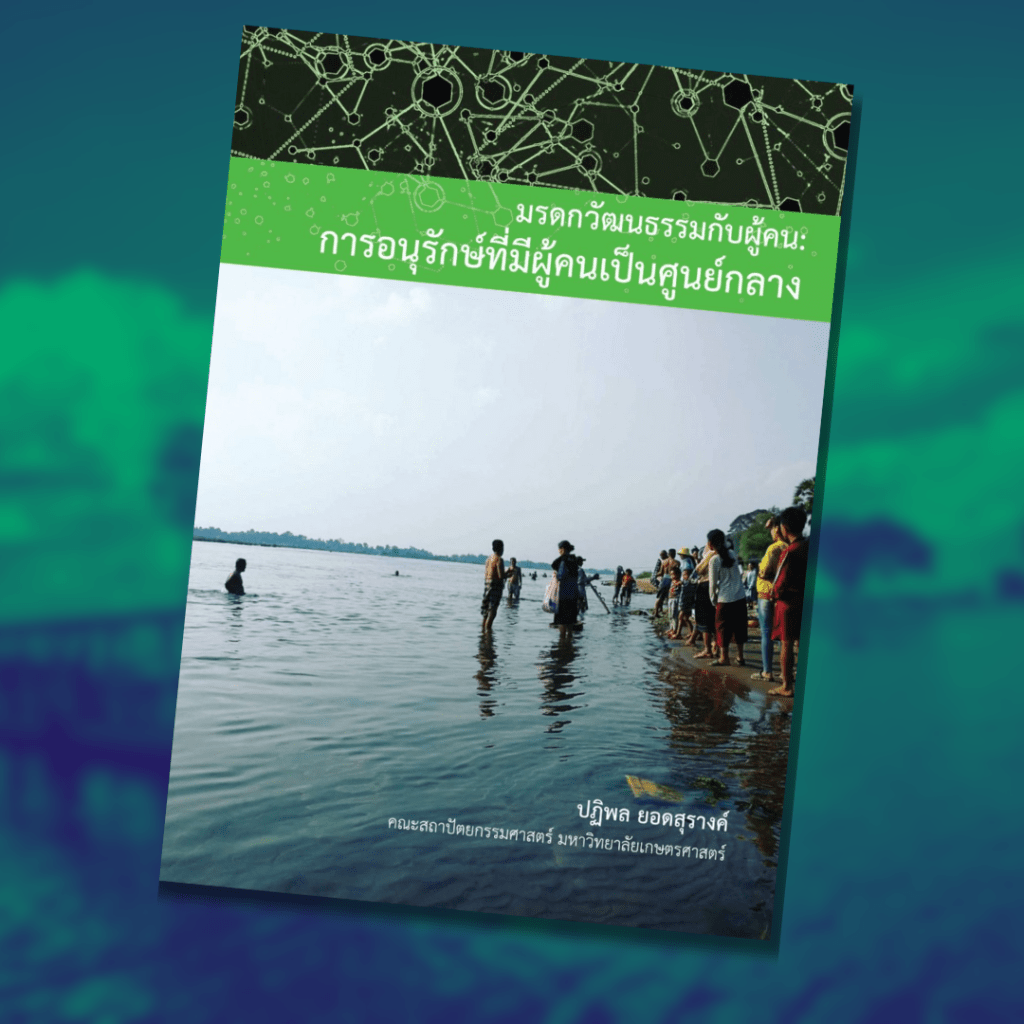
While institutional and legal frameworks often separate conservation processes and create challenges in practice, the book presents case studies that show alternative approaches. These examples provide insight into what is possible and inspire new directions for people-centered conservation.
Book Information
- Publisher: Faculty of Architecture, Kasetsart University
- Format: Paperback (8vo)
- Length: 120 pages
- Price: 390 THB
Where to Buy
Available at the Kasetsart University Book Center or through the Department of Architecture, Faculty of Architecture, Kasetsart University.
 Riverfront research alliance
Leave a comment