When speaking of “old houses and traditional dwellings,” many people’s minds may wander back to the era when canals in Bangkok were the lifelines of transportation and daily living. Wooden houses with thatched or tiled roofs, built by local craftsmen whose skills were passed down through generations, once lined the waterways. In the past, canals were the heart of life in Bangkok—vital for transport, agriculture, and settlement. Canal-side houses reflected a simple lifestyle closely connected to nature. Major canals such as Khlong Bangkok Yai, Khlong Bangkok Noi, and Khlong Bang Khun Non were once lined with old wooden houses, forming strong community clusters along the water.
Canal-side houses were once emblematic of the Thai way of life, intimately tied to water. Yet as time passed and the city expanded rapidly, these traditional houses by the canals were swallowed up by waves of urban development. Today, in an era of rapid urban growth, canal-side houses have become mere shadows of the past, gradually fading away.
The Decline of Canal-Side Houses
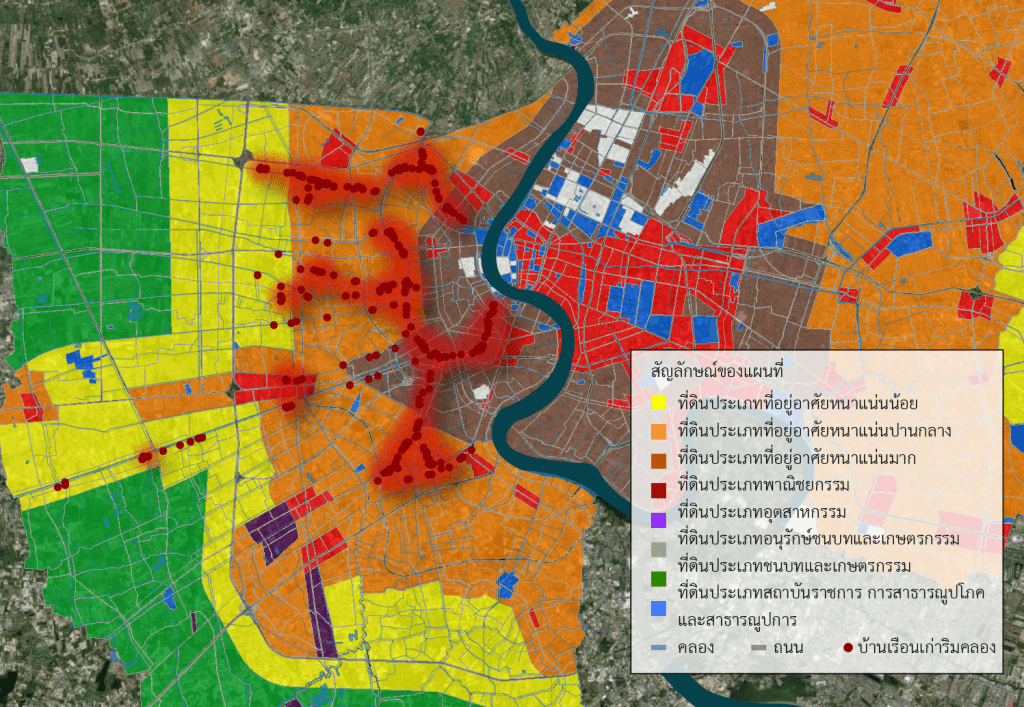
In many parts of Bangkok, old houses have been replaced by high-rise buildings or left as empty plots after demolition. Younger generations, no longer tied to the water-based lifestyle, often choose to sell the land for other types of real estate development. Today, remnants of these old houses are mostly seen on the Thonburi side, particularly along the old course of the Chao Phraya River. Notable clusters remain along Khlong Bangkok Noi, Khlong Chak Phra, Khlong Bangkok Yai, as well as early dug canals such as Khlong Ban Sai, Khlong Bang Ramat, Khlong Bang Phrom, and Khlong Bang Noi.
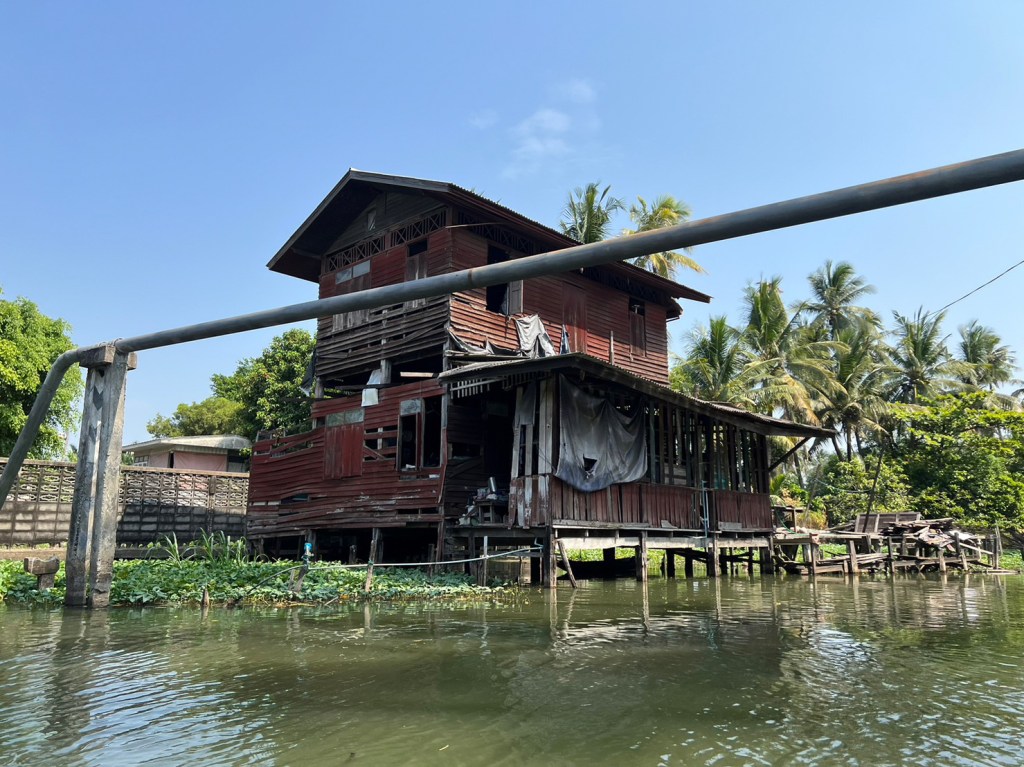
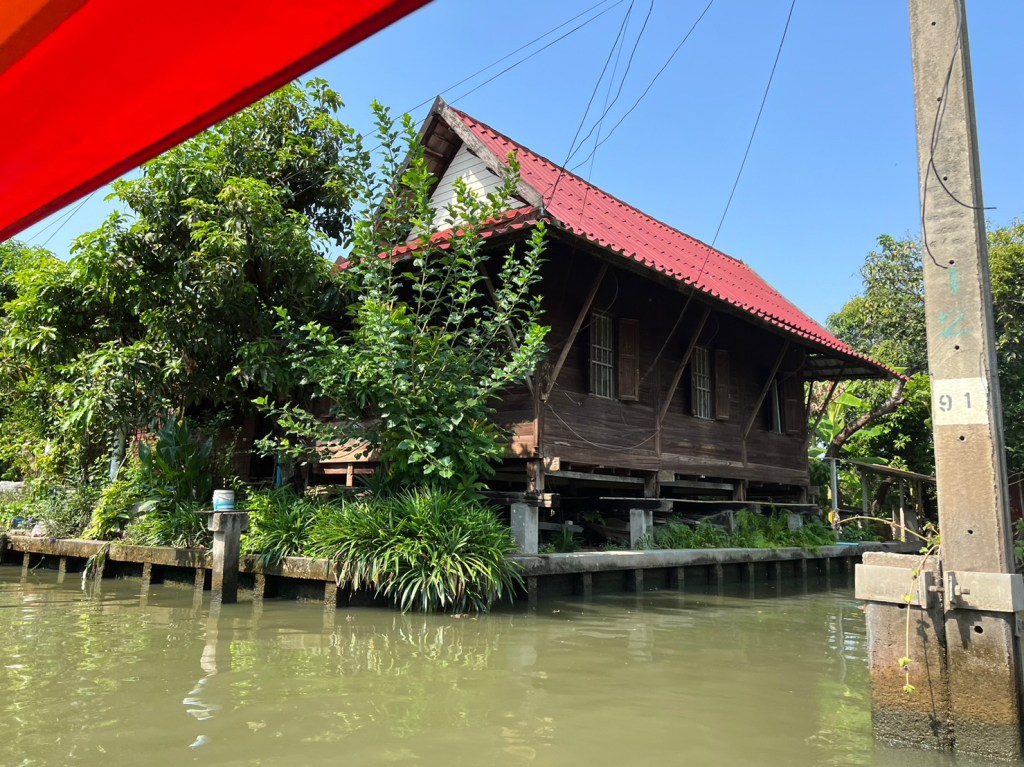
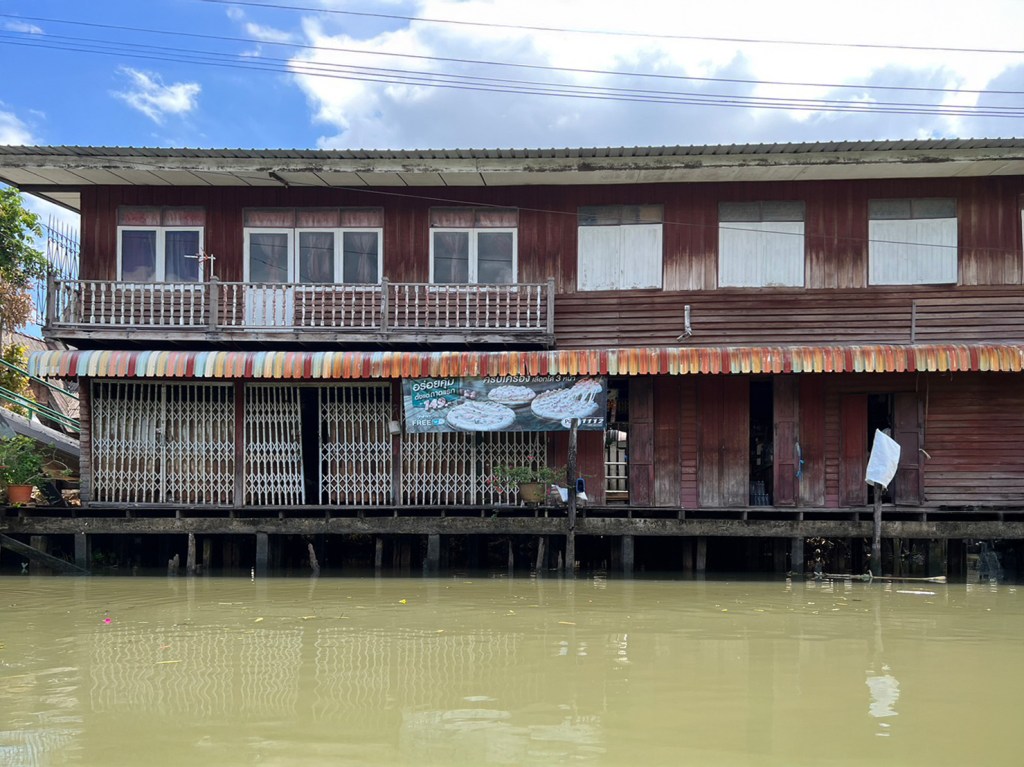
Research surveys of old canal-side houses in Thonburi reveal that fewer than 400 houses still survive, scattered along historically important canals such as Khlong Bangkok Yai, Khlong Phasi Charoen, and Khlong Ban Sai. Compared to the past, this is a mere fraction—many areas have been replaced with modern buildings or left vacant. These old houses are tangible traces of cultural traditions and ways of life that, if not urgently preserved, may vanish forever.
The more than 400 surviving canal-side houses include traditional Thai stilt houses, low-rise canal dwellings, wooden row houses, and even aristocratic residences such as gingerbread houses. Each type carries its own unique identity, reflecting life by the water—for example, wooden row houses often featured verandas for displaying goods and steps designed for mooring boats right in front.
Where Canal-Side Houses Remain
One of the most concentrated areas is along Khlong Bangkok Yai, where nearly 60 houses remain. This area once attracted the elite due to its proximity to the capital’s center. While some houses have had their exterior materials replaced, the original structures remain intact, preserving their character. Khlong Bangkok Yai holds strong potential to be developed into a cultural landscape that showcases Thai architectural heritage.
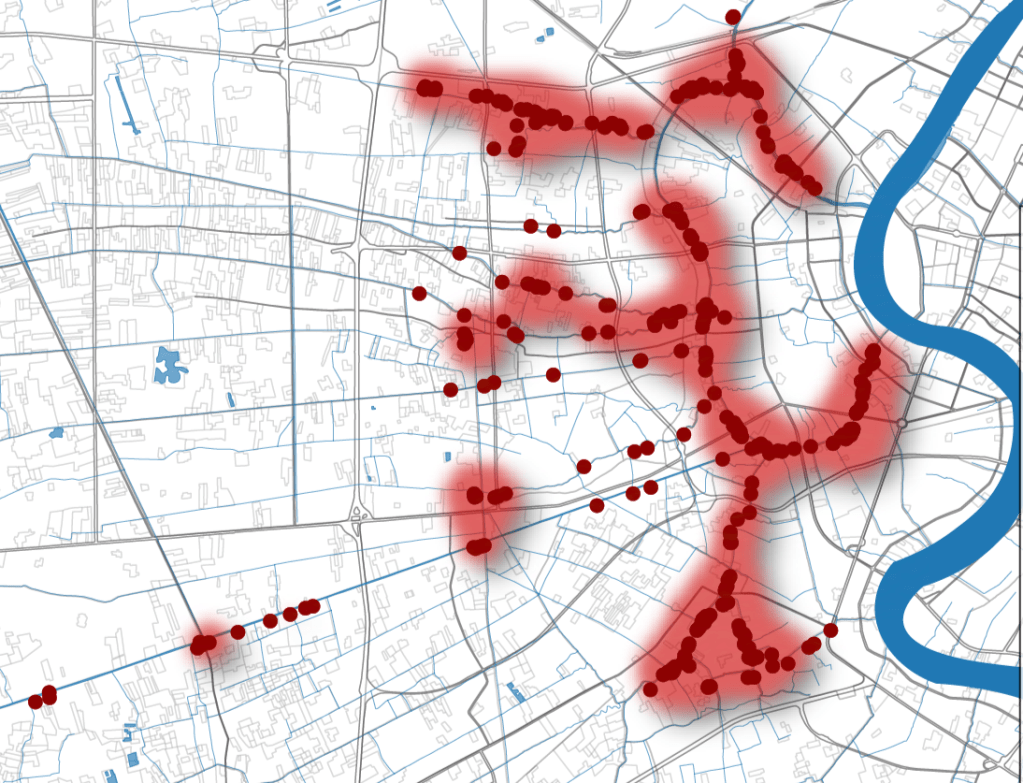
At the mouth of Khlong Bang Chueak Nang where it meets Khlong Bangkok Yai, nearly 40 houses remain. Along Khlong Sanam Chai, connecting to Khlong Bang Mod, over 30 houses are clustered together. These communities embody the traditional riverside lifestyle—despite modifications, rows of wooden houses still reflect authentic local ways of living. Khlong Sanam Chai itself has historic significance dating back to the Ayutthaya period as a transportation route to Samut Sakhon, while Khlong Bang Mod retains its charm with garden houses integrated into a green canal-orchard landscape. This area was once home to the lively Wat Sai floating market, which, though no longer thriving, still echoes its past glory through the surviving houses.
Additionally, nearly 30 houses survive where Khlong Bangkok Noi meets Khlong Chak Phra, and almost 30 more line Khlong Ban Sai. Each of these clusters represents heritage values and historical layers, forming an important cultural legacy of Bangkok’s canal-side communities.
Why Are Canal-Side Houses Disappearing?
- Urban expansion and lifestyle changes. Agriculture is no longer the main occupation, and small canals and ditches have disappeared when left unused. Many canals were filled in for roads and infrastructure. As the importance of canals diminished, canal houses became less accessible, driving people toward more modern, convenient housing closer to workplaces.
- Maintenance burdens. Old houses require significant money, time, and resources for repair, as they were mostly built from wood and natural materials prone to decay. Preservation also demands skilled craftsmen with expertise in traditional techniques, who are increasingly scarce today.
- Economic incentives. Selling land to developers seeking urban plots is a practical choice for many owners, converting high-maintenance assets into immediate income. Particularly when repair costs are high, selling reduces financial burdens while yielding greater returns than preservation.
The Future of Canal-Side Houses
Preserving these houses is not only about saving buildings—it is about safeguarding the identity and culture of Bangkok. They could be revitalized as cultural tourism destinations linking past and present, such as community museums or living heritage learning centers. The Historic Urban Landscape (HUL) approach could provide a framework for balancing conservation with urban development.
Ultimately, the question “How many canal-side houses remain in Bangkok?” cannot be answered by numbers alone. It should inspire us to reflect on their cultural value and to collaborate in preserving what remains—ensuring that the stories of canal-side houses continue to be told.
Read full article at Kiatthanawat, A., Yodsurang, P., & Krasae-in, A. (2024). Exploring Thai Vernacular Houses for Heritage Tourism along the Western Bangkok Canals. Nakhara : Journal of Environmental Design and Planning, 23(1), Article 407. https://doi.org/10.54028/NJ202423407
 Riverfront research alliance
Leave a comment