Once upon a time, somewhere in the fertile plains, there was a land that lived by the rhythm of water. Every year, the river swelled and spread across the fields, bringing life to the soil and food to the people. The farmers grew floating rice that rose with the flood and sank with the season’s end. It wasn’t high-yield, but it was harmonious. Life followed the water’s pulse.
Then came the age of modernization. Canals were deepened, machines arrived, and the state promised prosperity through the off-season crop. Farmers learned to depend on irrigation pumps and chemical inputs, and the government promised stable rice prices. “Why wait for floods,” they said, “when you can control the water?” For a time, the dream seemed real. But as the years passed, things changed. High-levee roads and concrete floodwalls were built to protect industrial zones and urban areas. These barriers blocked the natural flow between rivers and fields. The water gates, once opened to let life spread across the floodplain, were now shut tight to keep it out. The water no longer moved freely into the lowlands; it became trapped along the rivers. As a result, riverside settlements stayed flooded longer and deeper, while the fields beyond grew dry and cracked.
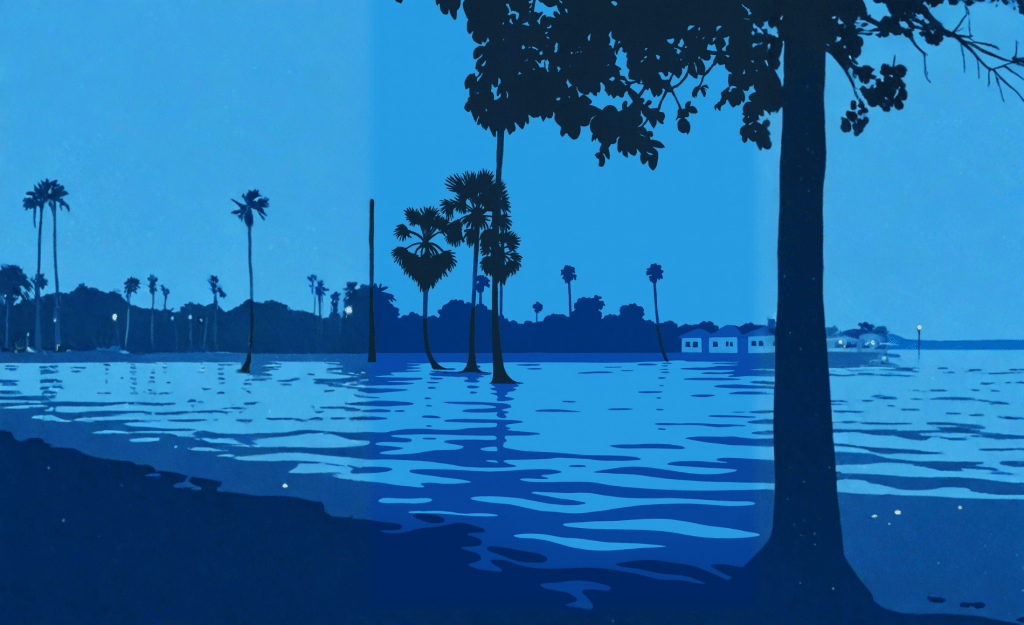
Officials began to talk about “zoning” again, grow rice only once in the rainy season, they said, and plant low-water crops in the dry months. But farmers asked, “If not off-season, what then? If we plant other crops, who will buy them? Where are the markets?” The government offered plans but no buyers. The irrigation system served factories and cities first, leaving farmers to argue among themselves over what little water remained.And so, the tale went on: when the flood came, the gates closed; when the drought came, the pumps broke.
Each year, new policies promised balance, yet the same irony returned. The more humans tried to control the water, the less they understood it. The river, patient and ancient, still flowed where it wished, watching as people-built walls to protect themselves from the very thing that once gave them life. This was the Farmer’s Tale, a story of progress that forgot its roots, of water that was tamed until it turned against its tamers.
* This story is fictional, yet nothing in it is unfamiliar.
 Riverfront research alliance
Leave a comment