Students from the courses Cultural Heritage Theory and Advanced Cultural Heritage Theory participated in a paddle trip along Khlong Om Non in October as part of their experiential learning on water heritage. The activity allowed students to immerse themselves in the real context of canalside life, encouraging them to step into the water and observe the landscape through the eyes of local residents. By engaging directly with the environment, they could better understand the relationship between people, water, and heritage, linking classroom discussions on cultural landscape and sustainability with hands-on experiences of community interaction and traditional waterways.
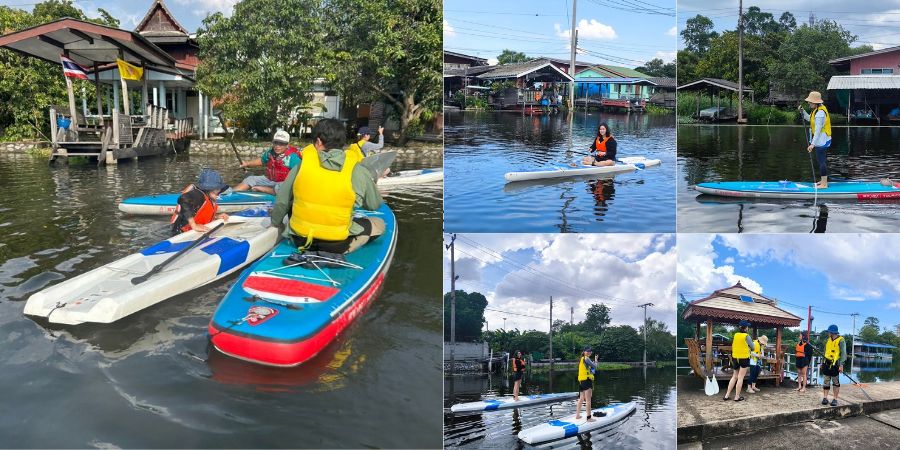
Each group paddled a distance of roughly six to ten kilometers, setting off from different temples and small piers scattered along Khlong Om Non. The route allowed students to experience a variety of waterfront environments, from densely settled canalside neighborhoods to quieter stretches where vegetation and reflections dominated the scene. As they moved through these spaces, students stopped to talk with local residents who live their daily lives in close relationship with the water where people cook, bathe, and even relax with an evening beer beside the canal. These informal exchanges became meaningful moments of learning, as stories unfolded about how communities have adapted to changing water levels, the impacts of urban development, and the gradual loss of public access to the river. Residents shared memories of when the canal served as a vital social and transport space, contrasting it with the more fragmented reality of today. Yet amid these changes, the students also witnessed the calm, enduring rhythms of canal life. The scent of food from floating kitchens, the sight of children playing at the water’s edge, and the quiet reflections that reminded them how deeply the water remains woven into local identity and everyday life.
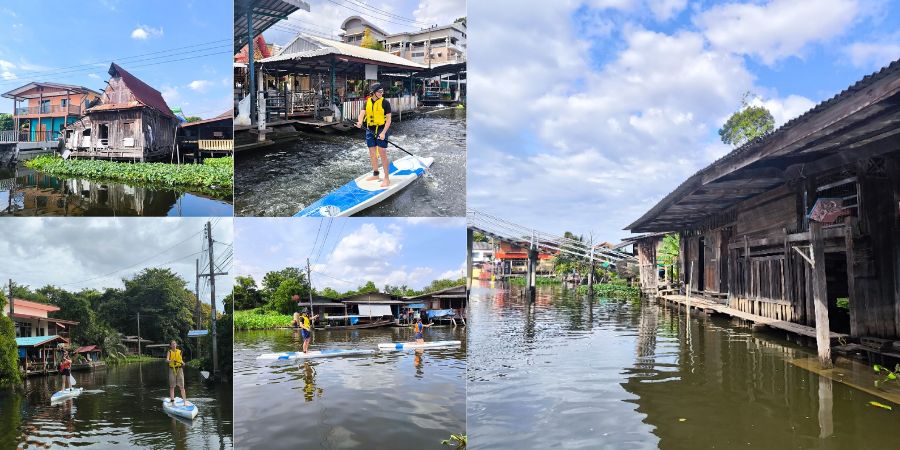
The trip was hoped to help students understand that living with water is not only about managing an environment or a natural resource, but also about engaging with layers of memory, emotion, and identity that define the people who live beside it. By paddling slowly through the calm and reflective waters of Khlong Om Non, students were encouraged to look beyond the surface to notice the smell of the water, the sound of oars against the current, the texture of the canal banks, and the way light and shadow moved across old wooden houses. These sensory experiences revealed details that often go unseen when viewed from the land. It was hoped that by being physically immersed in this environment, students would develop empathy and insight into what it means to coexist with water as both a friend and a challenge in daily life.
Through the journey, the canal itself became a space of learning, a kind of floating classroom where knowledge was not delivered through lectures or slides, but through observation, participation, and quiet reflection. Conversations with residents, who shared their stories of past floods, lost access points, or the small joys of evening gatherings by the water invited students to see how water shapes memory and identity across generations. It is hoped that this intimate experience would inspire them to think critically and sensitively about how design, heritage, and community resilience can coexist. In this sense, the trip was not just an academic exercise but a reminder of hope. The hope that by understanding the deeper meanings of living with water, the next generation of architects and heritage practitioners might contribute to more mindful, compassionate, and sustainable ways of caring for riverine landscapes.
 Riverfront research alliance
Leave a comment