This year has been a very productive and meaningful one for our work under the Riverfront Research Alliance. While two publications stand out as major milestones, they are part of a wider body of research outputs that grew from long-term engagement, repeated field visits, and continuous collaboration across countries, disciplines, and communities. Rather than isolated papers, these works should be seen as connected pieces of a broader research journey along river landscapes in mainland Southeast Asia.
Among this year’s publications, one important highlight is our continued work in Si Phan Don, southern Laos. Fieldwork in this area is never simple. Reaching sites often means long hours on small boats, navigating strong currents, shallow rocks, and rapidly changing water levels. From this demanding context came our second academic paper focused on Si Phan Don, and one of the very few studies that directly examines settlement patterns in this unique Mekong setting. Published in the Journal of Mekong Societies (Vol. 21 No. 3, December 2025), Settlement Patterns and Cultural Landscapes of Riverfront Communities in Si Phan Don, Southern Laos explores how Mekong river dynamics, livelihoods, and culture shape adaptive riverfront settlements.
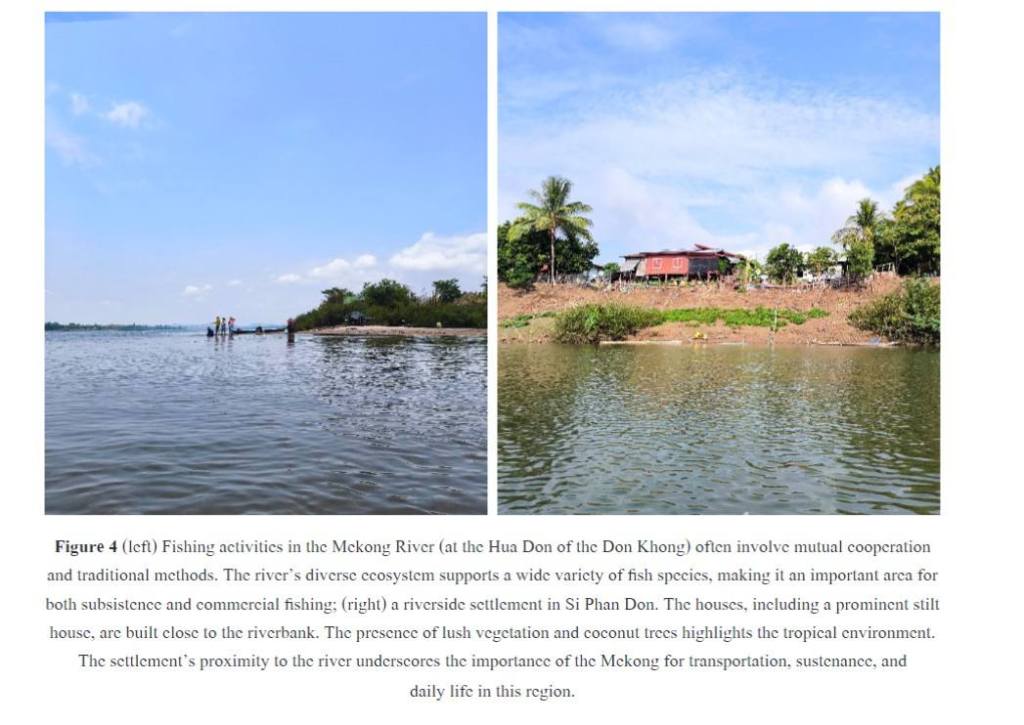
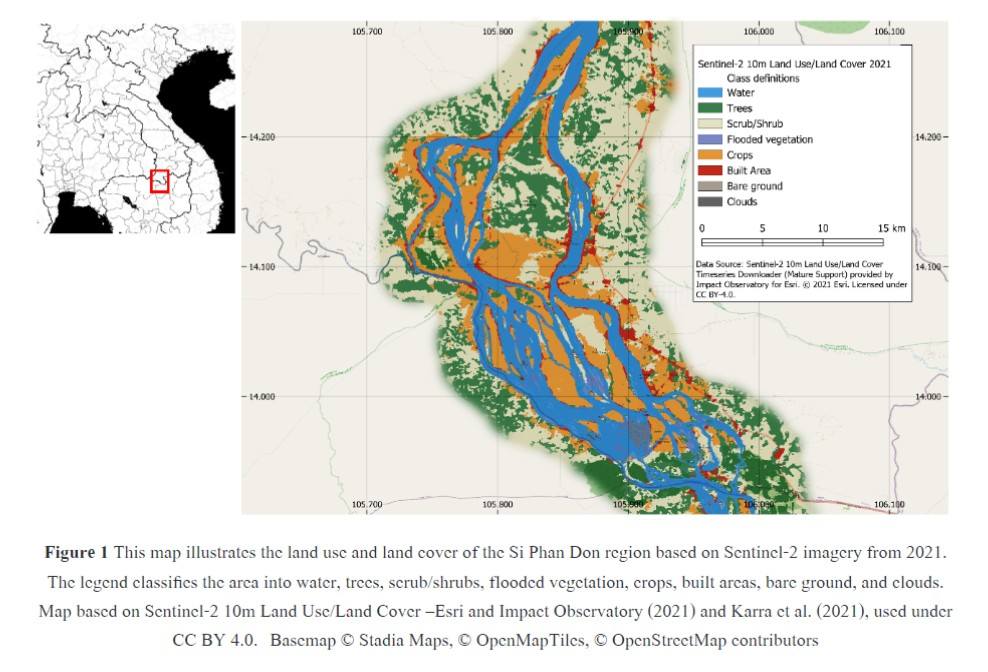
Using detailed field surveys combined with GIS analysis, the paper documents how houses, circulation paths, river access points, and communal spaces are organized in response to seasonal floods, fishing practices, mobility needs, and social life. What becomes clear is that these settlements are not static. They are flexible and adaptive, shaped by everyday practice rather than formal planning. At the same time, they reflect deep cultural continuity. Spatial patterns encode knowledge passed down through generations, allowing communities to live with the river rather than against it. The full article can be read here: https://so03.tci-thaijo.org/index.php/mekongjournal/article/view/281550
Another major publication this year appears in the International Journal of Intangible Heritage, Vol. 20 (2025). This paper is the outcome of a five-year investigation in southern Laos, led by Professor Ikuro Shimizu as principal investigator, with a strong international and local research team. While the Si Phan Don paper focuses on physical and spatial patterns, this study moves into the intangible domain, examining purification rituals and their deep connections to landscape, belief systems, and community life.
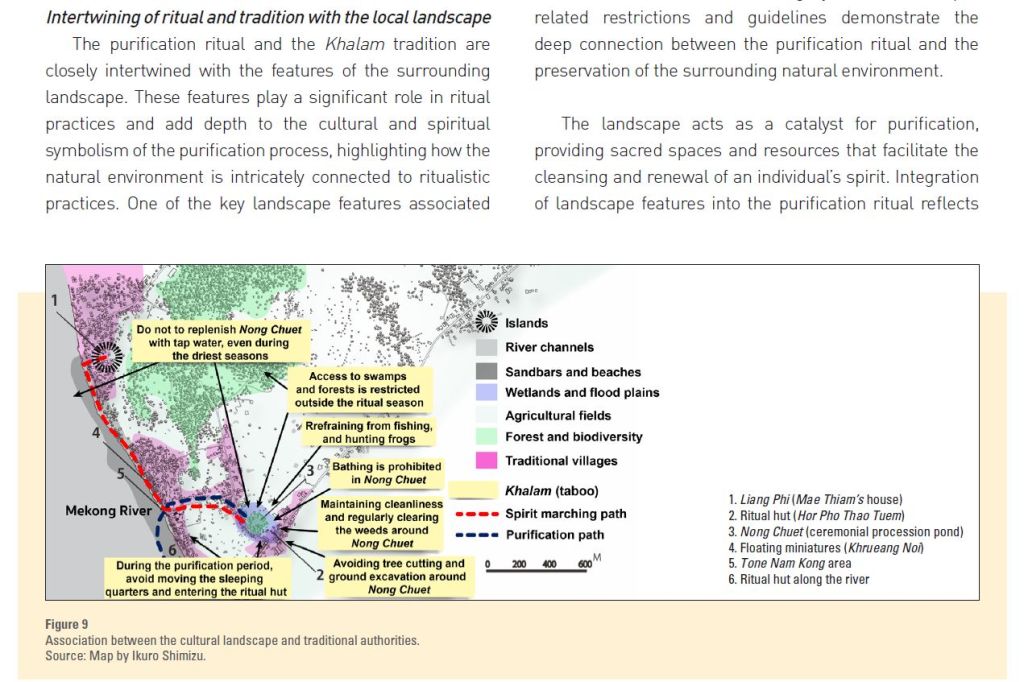
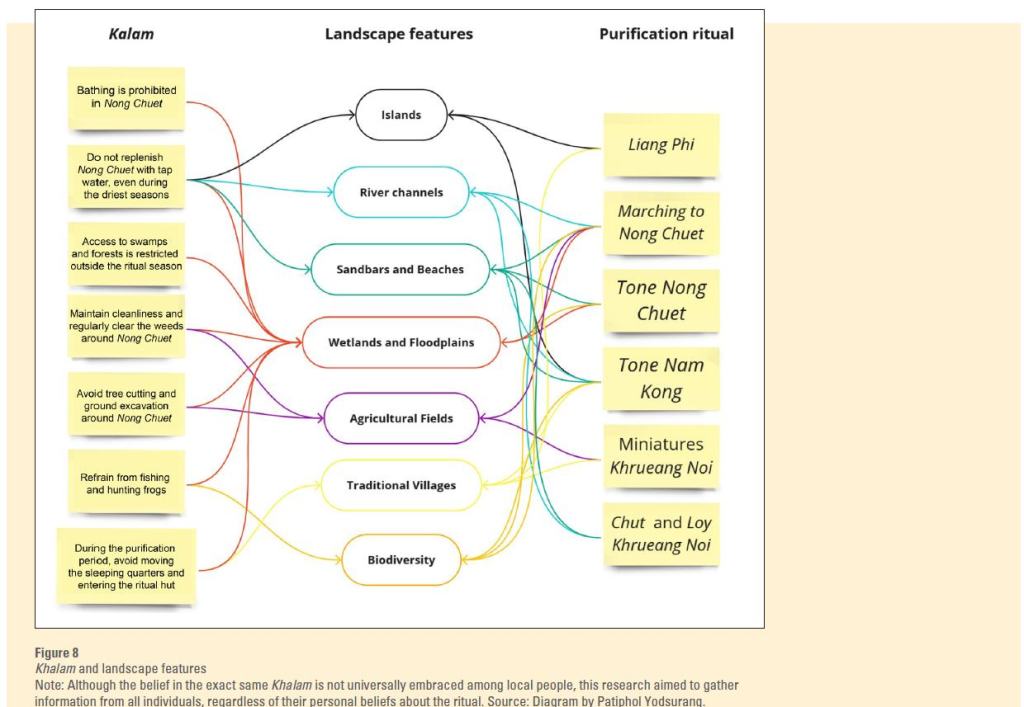
The research shows that purification rituals are not abstract or symbolic acts separated from daily life. They are performed in specific places such as riverbanks, forests, villages, and sacred sites, and they express how communities understand balance, protection, and responsibility. Water plays a central role, linking spiritual practice with ecological care. Through these rituals, moral values, environmental awareness, and social cohesion are reinforced. The study reveals how spiritual practices support long-term stewardship of land and water, showing that belief and ecology are tightly woven together. The full paper is available here: https://www.ijih.org/volumes/article/1206
Beyond these two highlighted publications, this year also includes other papers, ongoing manuscripts, and collaborative outputs that build on the same core themes: riverfront settlements, cultural landscapes, living heritage, and the relationship between people and water. Together, they reflect a commitment to long-term, place-based research rather than quick results. Some papers focus on spatial morphology and GIS analysis, others on rituals, memory, and intangible heritage, but all are connected by the same rivers and communities.
Seen as a whole, this year’s publications represent not just academic success, but a shared process of learning with local partners, students, and fellow researchers. They underline what riverfront research truly means to us: patience, trust, physical presence in the field, and respect for local knowledge. These works belong to a wider collective effort, and they mark another step forward in understanding river landscapes as living systems where culture, ecology, and everyday life are inseparable.
 Riverfront research alliance
Leave a comment