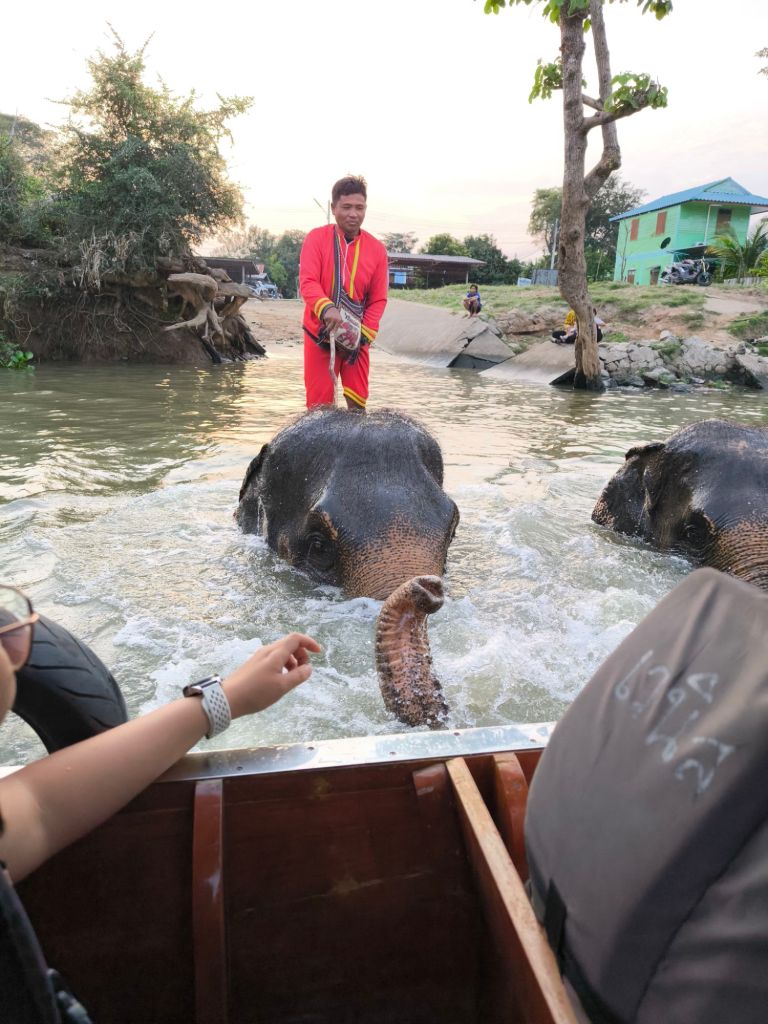
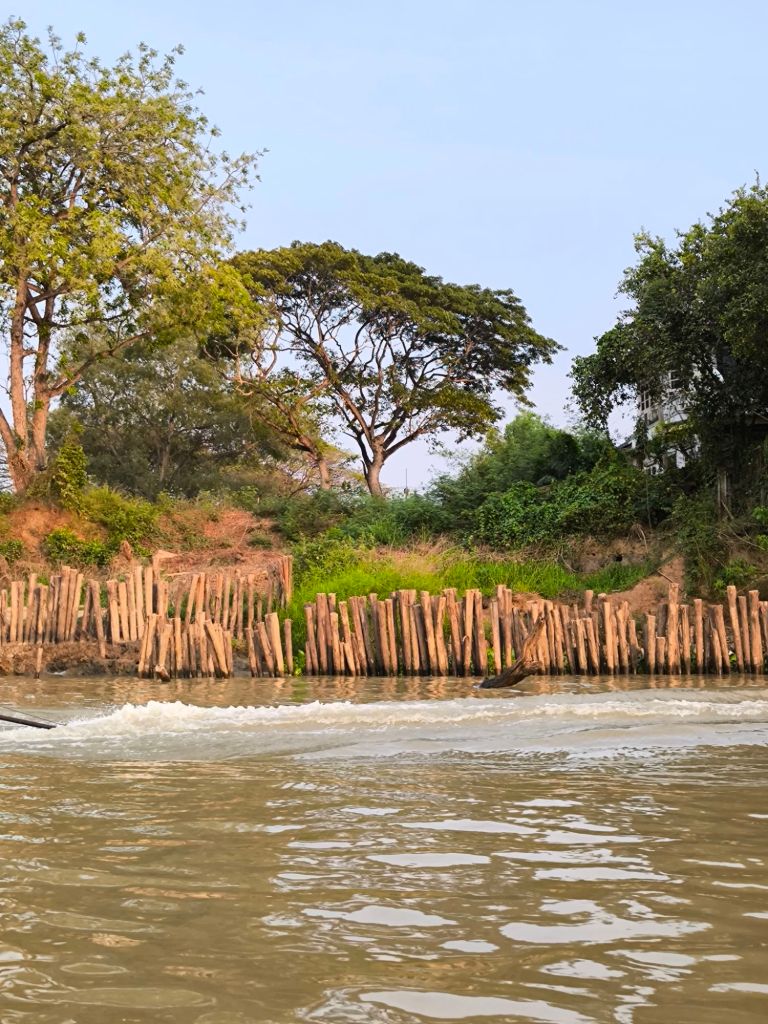
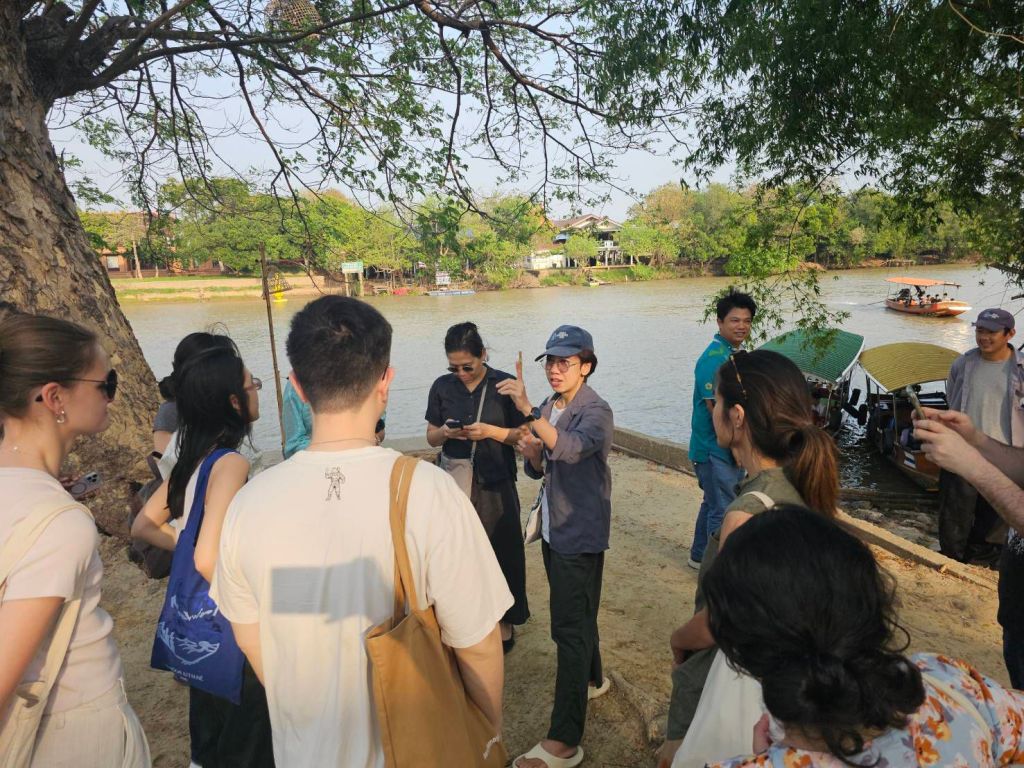
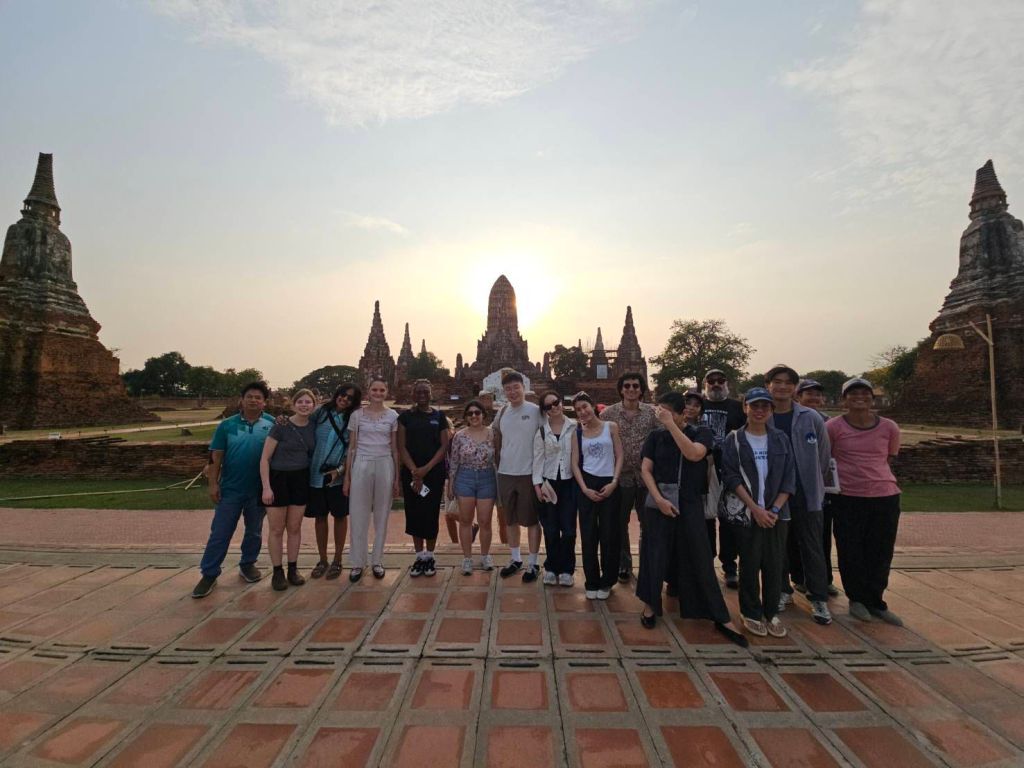
Recently, Riverfront Research Alliance hosted students from the Yale School of Architecture, led by Rachaporn Choochuey and Surry Schlabs, in Ayutthaya for several days of immersive field-based learning. The program focused on understanding the island city not simply as an archaeological site, but as a living riverine system shaped by water, climate, and long-term human adaptation. Through structured site lectures, walking surveys, and spatial mapping exercises, students examined historic riverfront ruins and the broader urban morphology of Ayutthaya as a hydrological landscape. A study visit to Wat Chaiwatthanaram, supported by the World Monuments Fund, situated monument conservation within a wider framework of river dynamics, erosion patterns, and environmental change. By cruising around the city island, students were able to read Ayutthaya from the water, recognizing how its defensive strategy, hydraulic infrastructure, trade routes, and ceremonial spaces were historically integrated into a coherent fluvial urban logic.
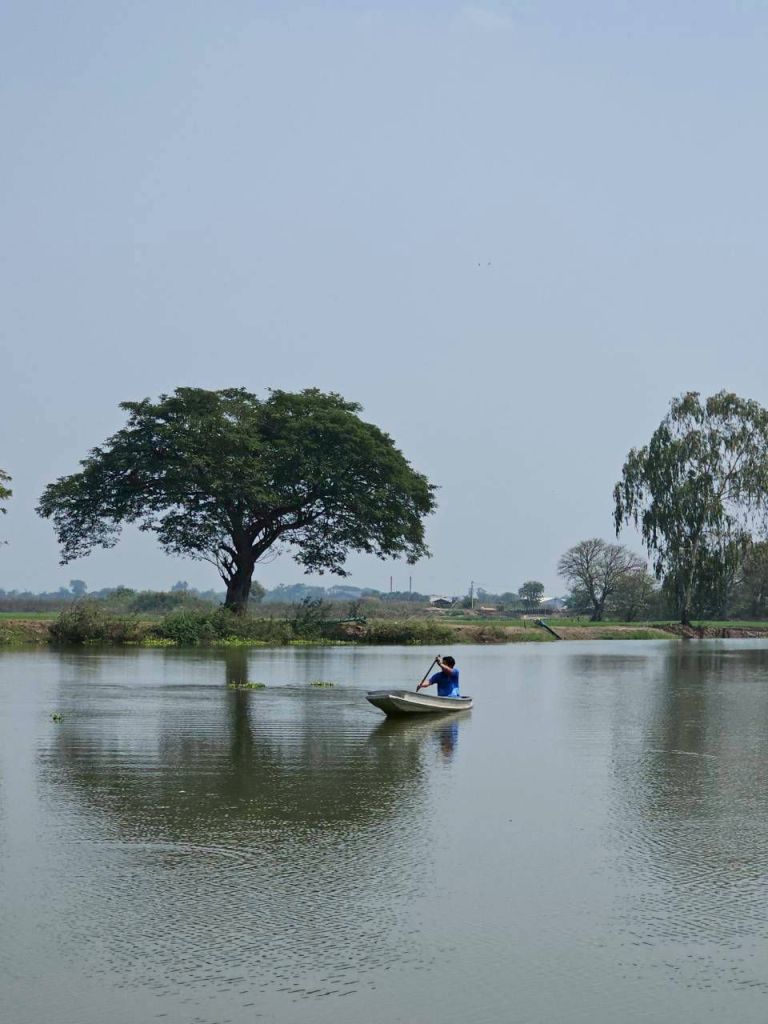
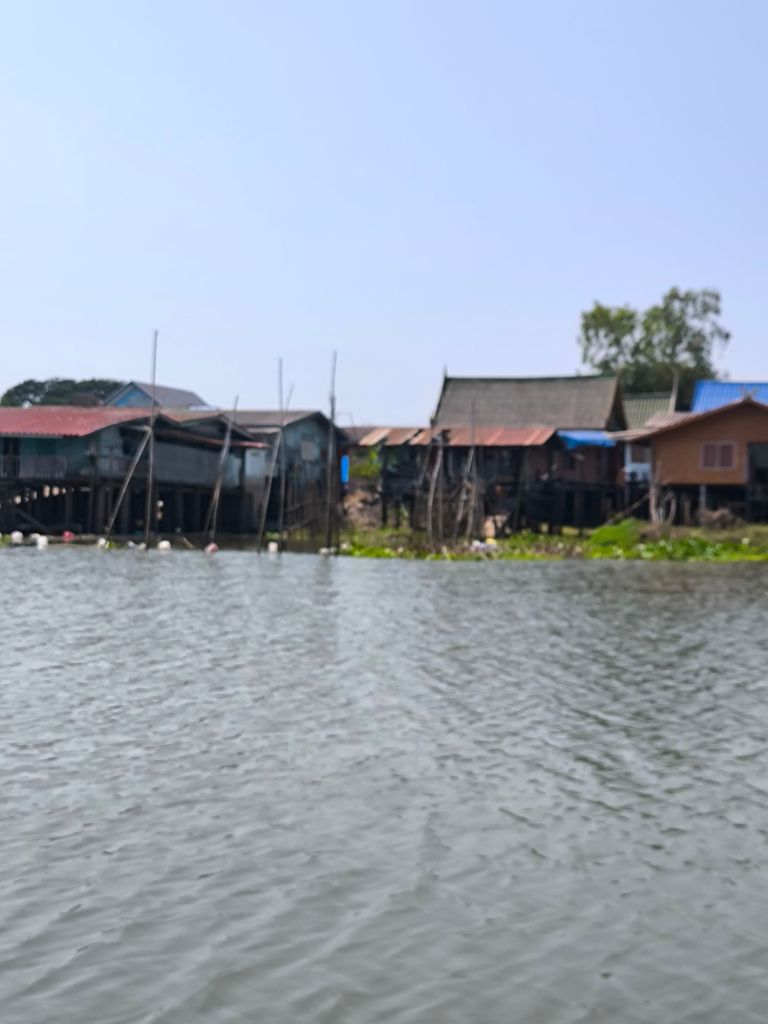
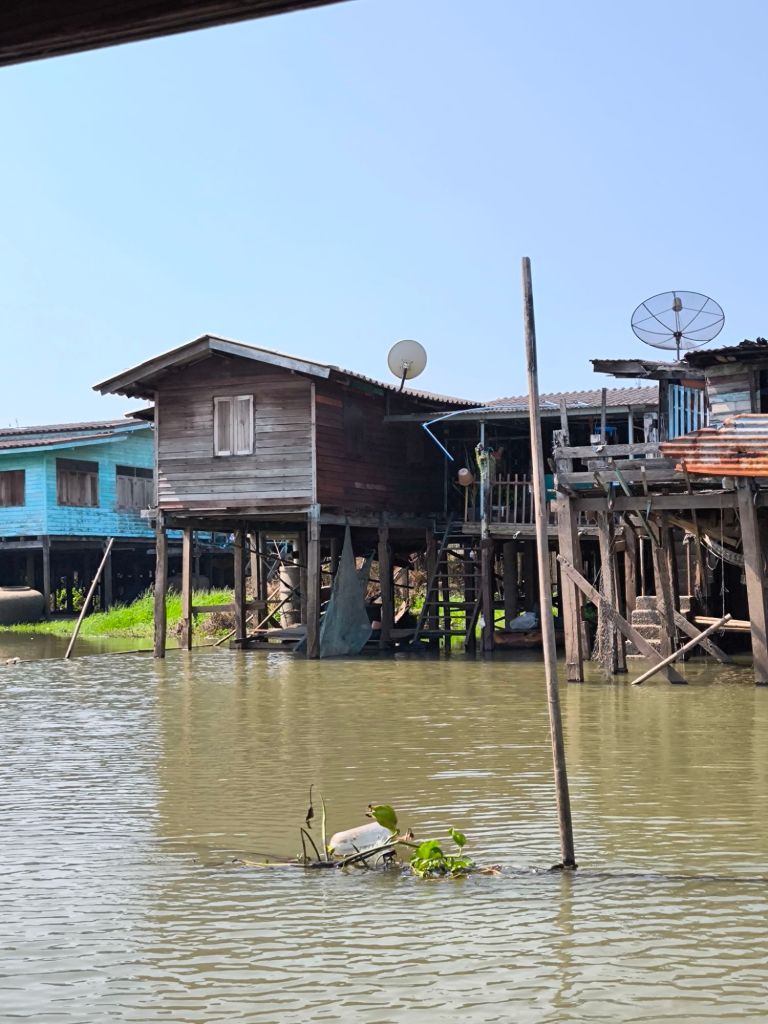
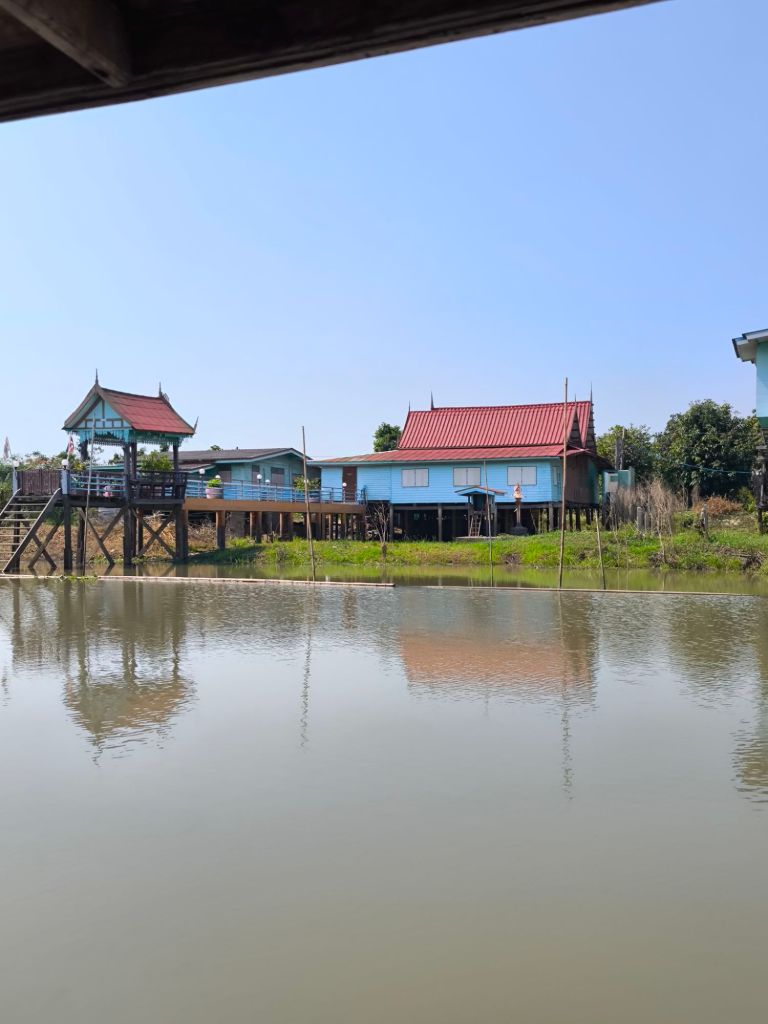
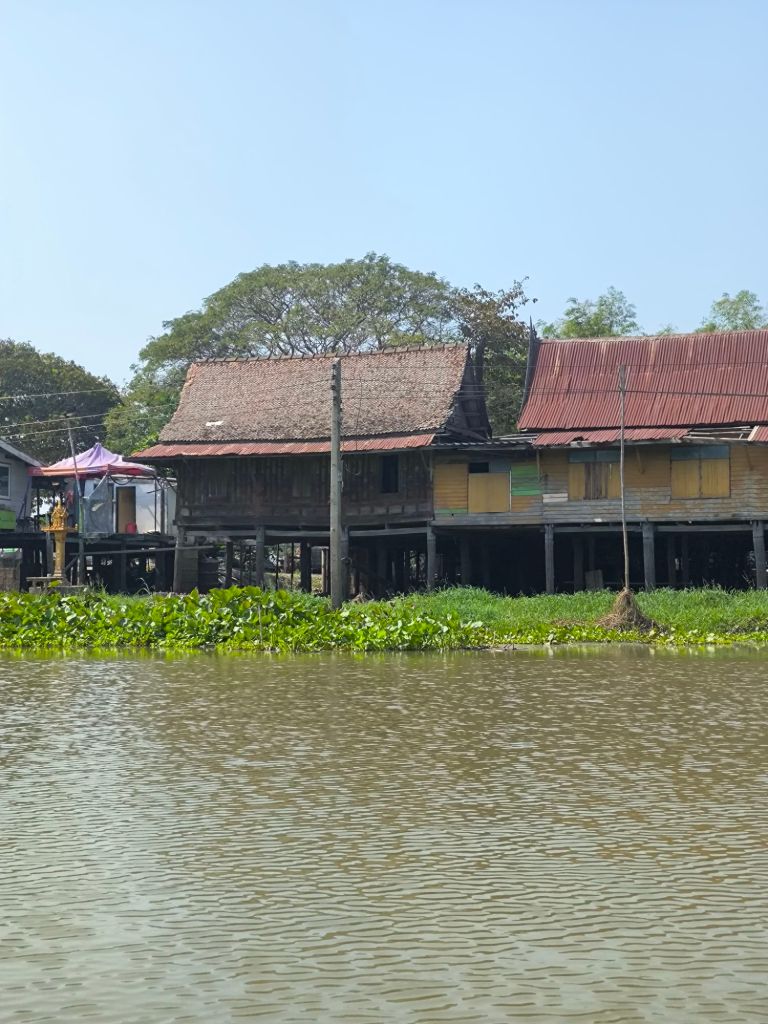
The field program extended beyond the historic core to the Sena Trough, one of the lowest floodplain areas in central Thailand. Here, students observed amphibious living conditions and examined how local communities continue to negotiate prolonged inundation and seasonal water fluctuation. Elevated wooden houses, adaptable ground-level spaces, temporary walkways, and flexible livelihood practices reveal an embedded ecological intelligence shaped by generations of lived experience. Rather than resisting water, these settlements operate through accommodation and incremental adjustment. In the context of increasing climatic uncertainty and less predictable flood regimes, such practices provide important insight into how vernacular systems maintain resilience without relying solely on large-scale infrastructural intervention.
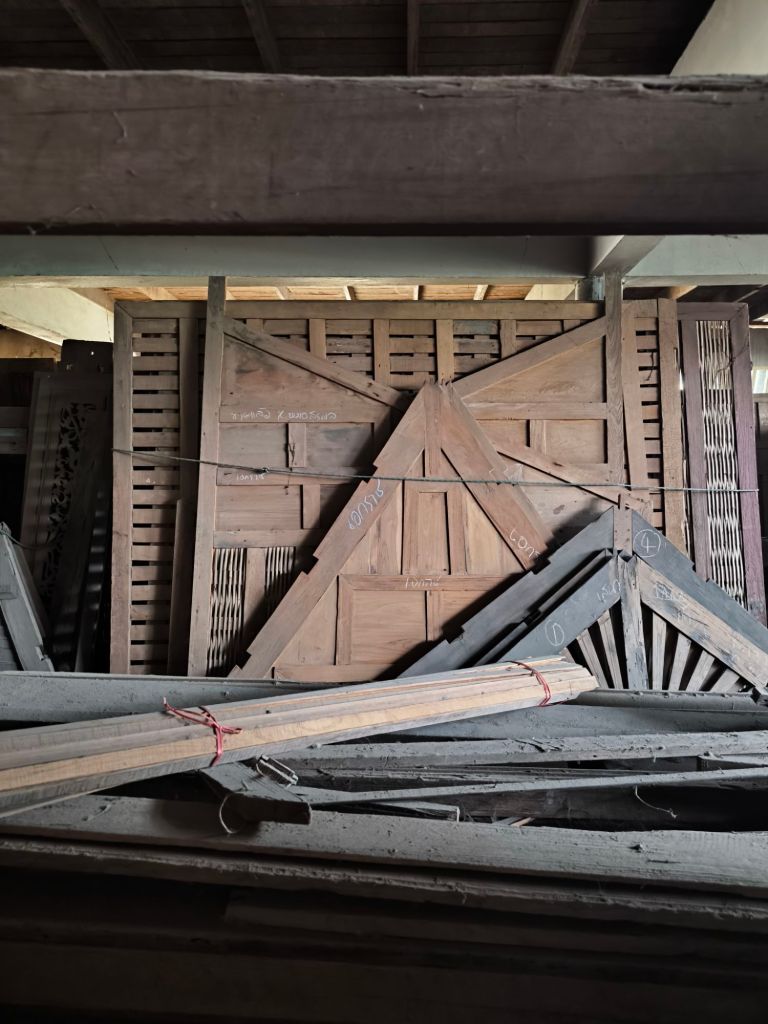
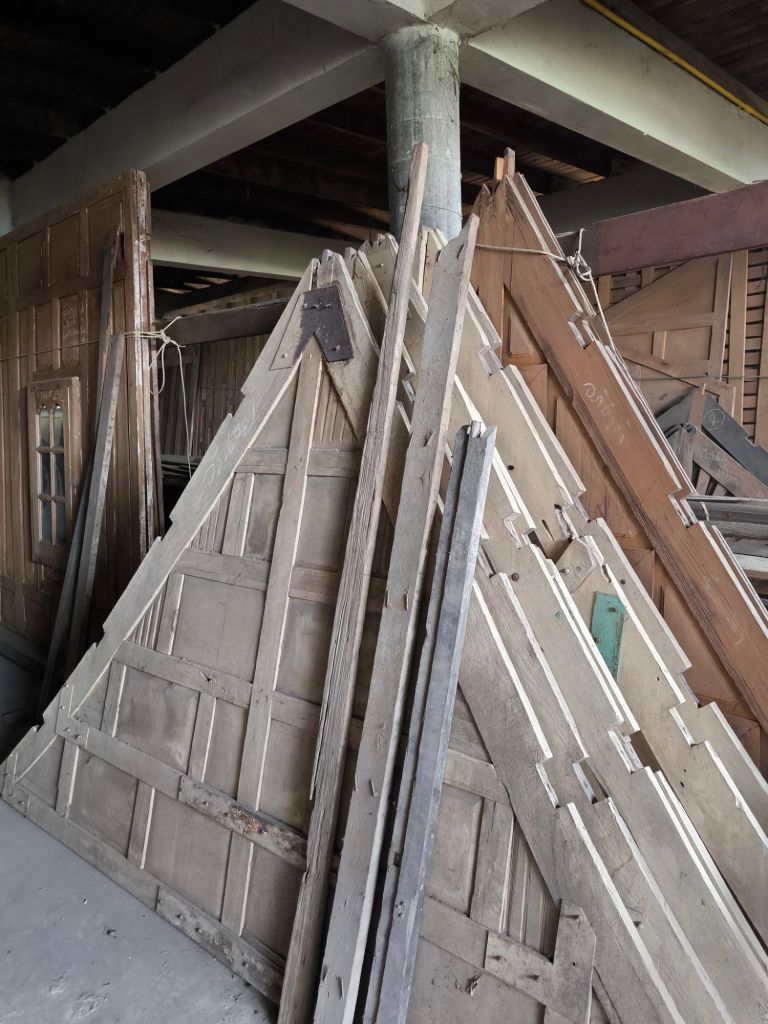
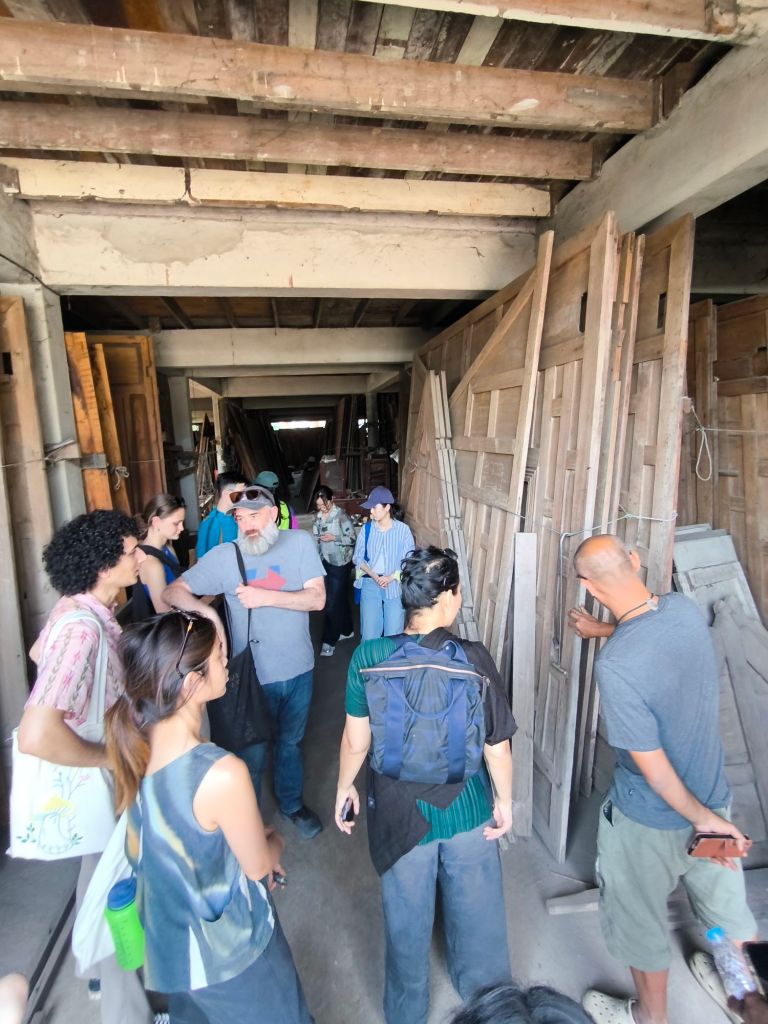
We also visited a well-documented second-hand timber yard specializing in traditional Thai wooden house elements. The collector systematically records the provenance of beams, columns, wall panels, roof structures, and carved components before resale. In some cases, salvaged ship timber has historically been integrated into domestic architecture, further blurring boundaries between maritime and residential construction. This space functions as an informal archive of dismantled houses, where architectural heritage circulates through reuse, relocation, and reassembly. It reflects both the vulnerability of traditional wooden architecture and its capacity for continuity through material mobility.
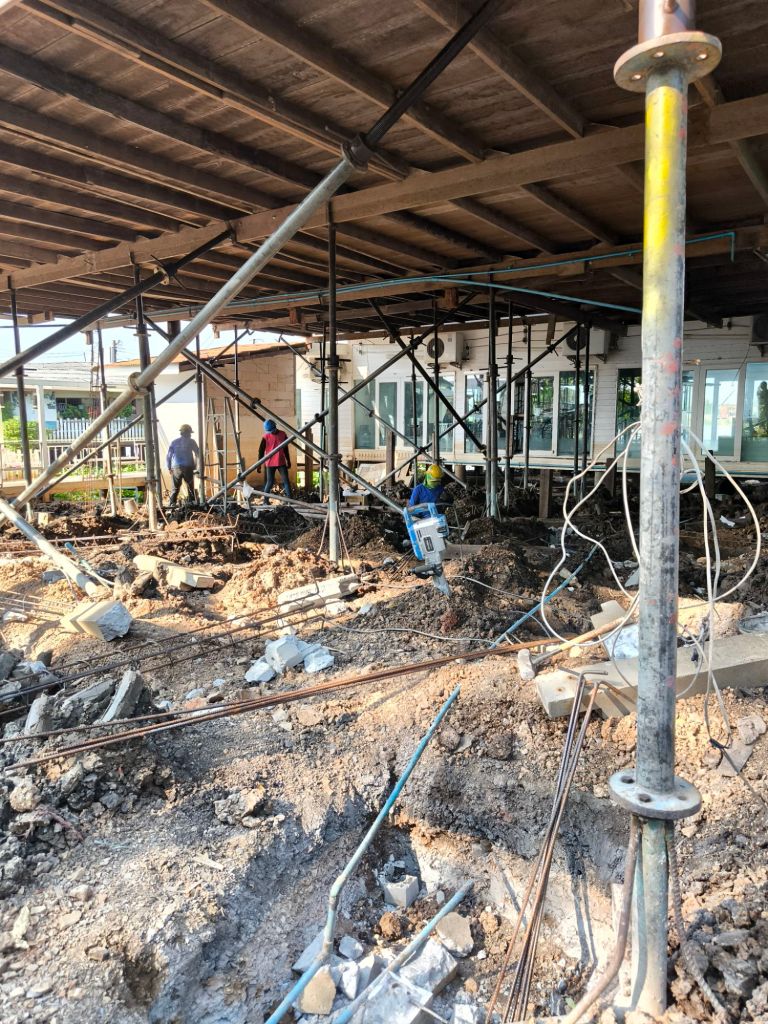
In addition, the program examined traditional house-lifting techniques as a critical vernacular response to rising and unpredictable water levels. Rather than abandoning or replacing existing structures, local builders incrementally elevate entire wooden houses using coordinated manual techniques, preserving material fabric, spatial identity, and social memory. This adaptive strategy demonstrates how construction knowledge embedded in local practice continues to function as a climate-responsive system. At a time when state-level prediction models and infrastructure planning struggle to keep pace with environmental change, these community-based techniques offer valuable lessons in flexibility, continuity, and grounded resilience.


 Riverfront research alliance
Leave a comment