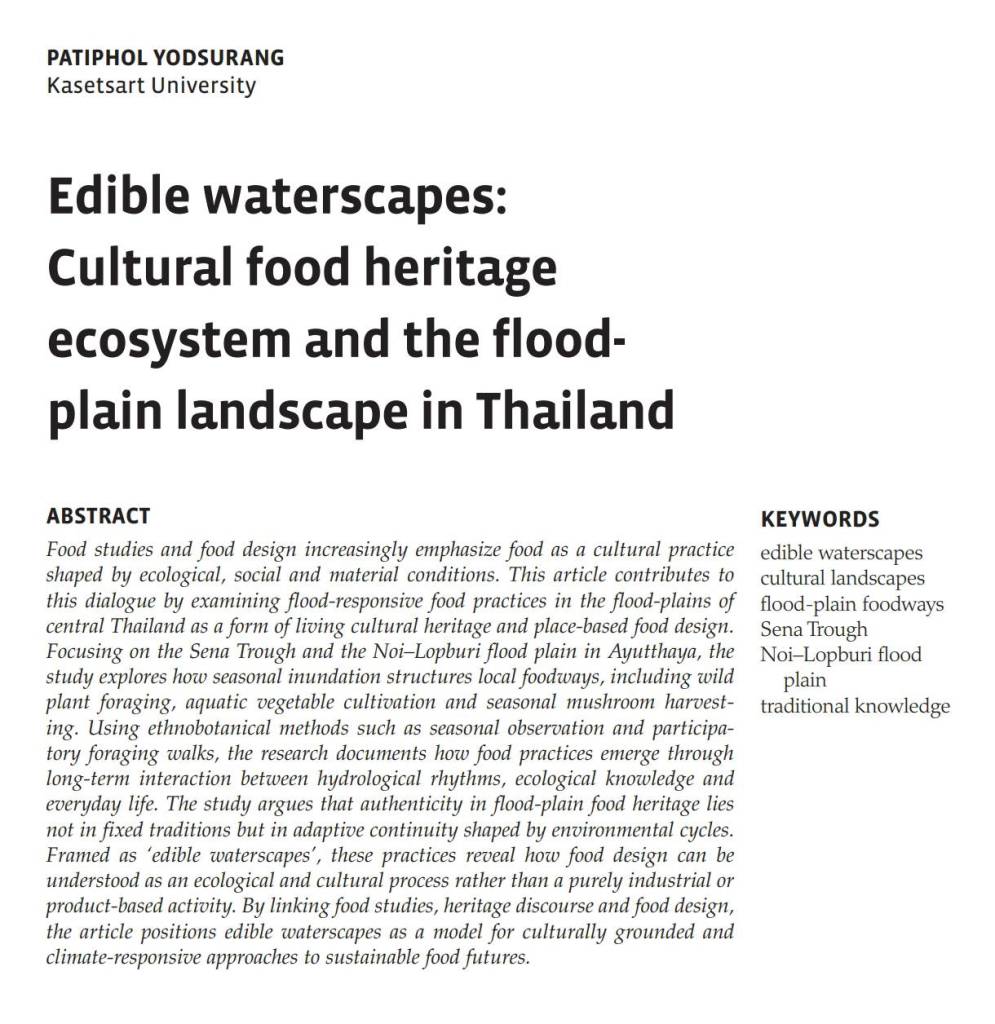
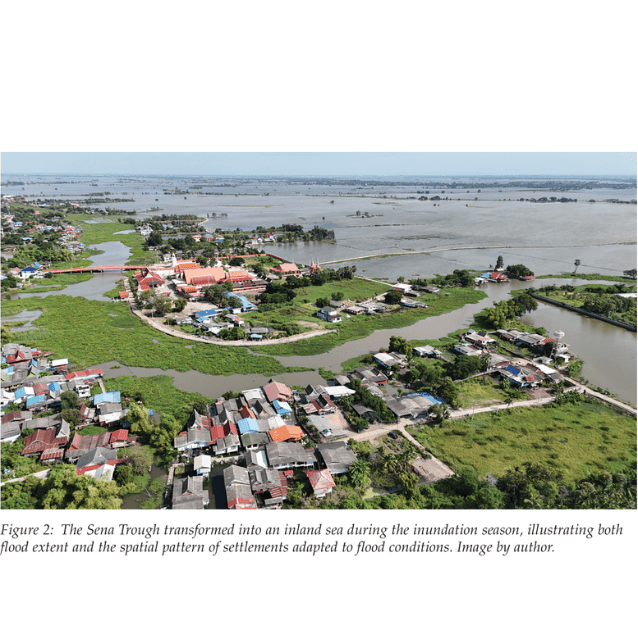
The second article of 2026 from the Riverfront Research Alliance, titled Edible Waterscapes, examines seasonal flooding in central Thailand through the lens of cultural landscape and food heritage. Rather than treating floods only as disasters, the study considers how recurring water cycles shape everyday food practices and ecological knowledge in floodplain communities. The research focuses on Ayutthaya, where seasonal inundation has long structured patterns of settlement, cultivation, and resource use along the lowland river system.
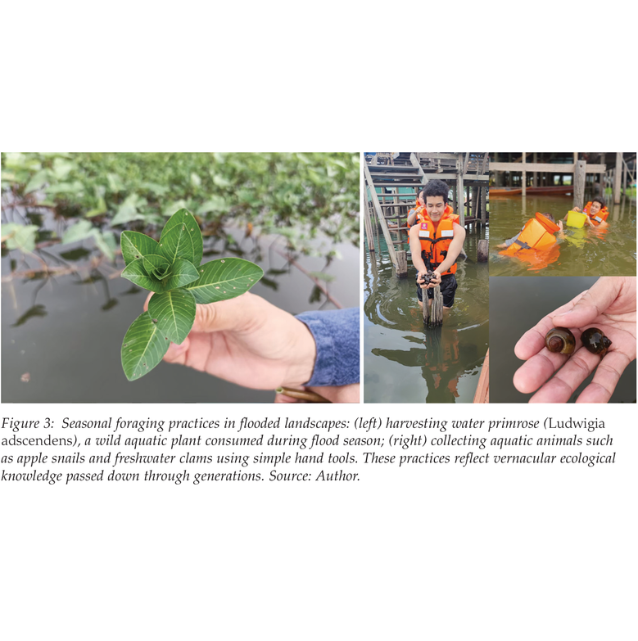
The article documents how residents rely on traditional ecological knowledge to gather edible plants, aquatic vegetables, and seasonal mushrooms that appear during flood periods. Floodwater temporarily transforms fields, canals, and orchards into productive landscapes that support foraging and small-scale food production. Local households adjust their cooking practices, ingredients, and seasonal diets according to the changing hydrological conditions. In this sense, the floodplain operates not only as a physical environment but also as a cultural food heritage ecosystem in which ecological rhythms shape everyday life.
At the same time, the research does not present flooding as something people celebrate or welcome. Communities in the floodplain live with disruption, uncertainty, and economic pressure during periods of prolonged inundation. The article therefore approaches flood adaptation from a realistic perspective. The practices described in the study reflect pragmatic responses developed through long-term experience rather than romanticized narratives of harmony with nature.
Through longitudinal field observations and ecological documentation, the study shows how seasonal knowledge continues to guide everyday decisions about food gathering, planting, and cooking. These practices represent a form of living heritage embedded in local landscapes and community memory. They also demonstrate how biodiversity, food culture, and hydrological cycles remain closely connected in floodplain environments.
The article ultimately argues that contemporary discussions of sustainable food design and climate adaptation can benefit from these local knowledge systems. Floodplain food practices show how communities adapt to environmental variability using flexible and place-based strategies. Recognizing these traditions may help inform new approaches to food systems, landscape planning, and climate-responsive design that acknowledge the cultural and ecological value of water-based environments.
Full Article: Edible waterscapes: Cultural food heritage ecosystem and the flood-plain landscape in Thailand
https://doi.org/10.1386/ijfd_00087_1
 Riverfront research alliance
Leave a comment