Along Khlong Aom Non, the former course of the Chao Phraya River, small waterside pavilions can still be found in front of temples and houses. Known as Sala Tha Nam, these structures may appear secondary to the temple’s main buildings, but they reveal how communities once lived, travelled, and performed rituals through the water. The Sala Tha Nam first developed as an interface between land and canal. When boats were the main form of transportation, it functioned as a waiting place, landing point, and entrance to the temple. Its open sides, raised floor, extended seating platform, and steps leading to the water responded directly to riverine life. The pavilion was not simply located beside the canal; it formed part of a connected spatial sequence linking the water, pier, pavilion, temple path, and sacred buildings.
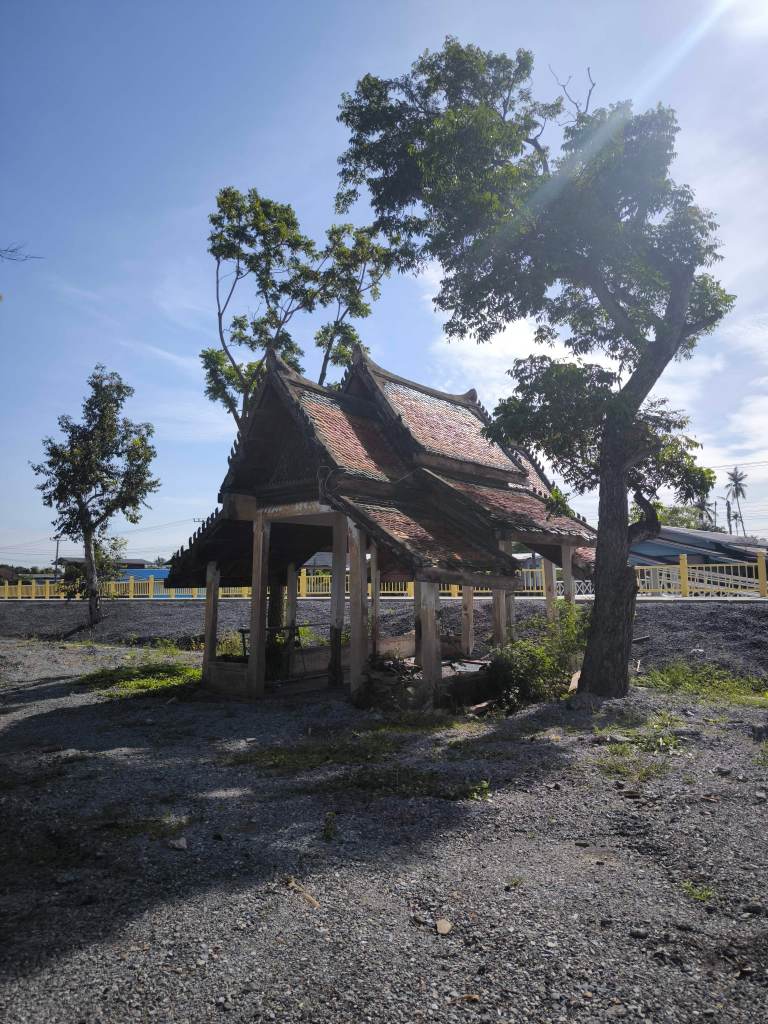
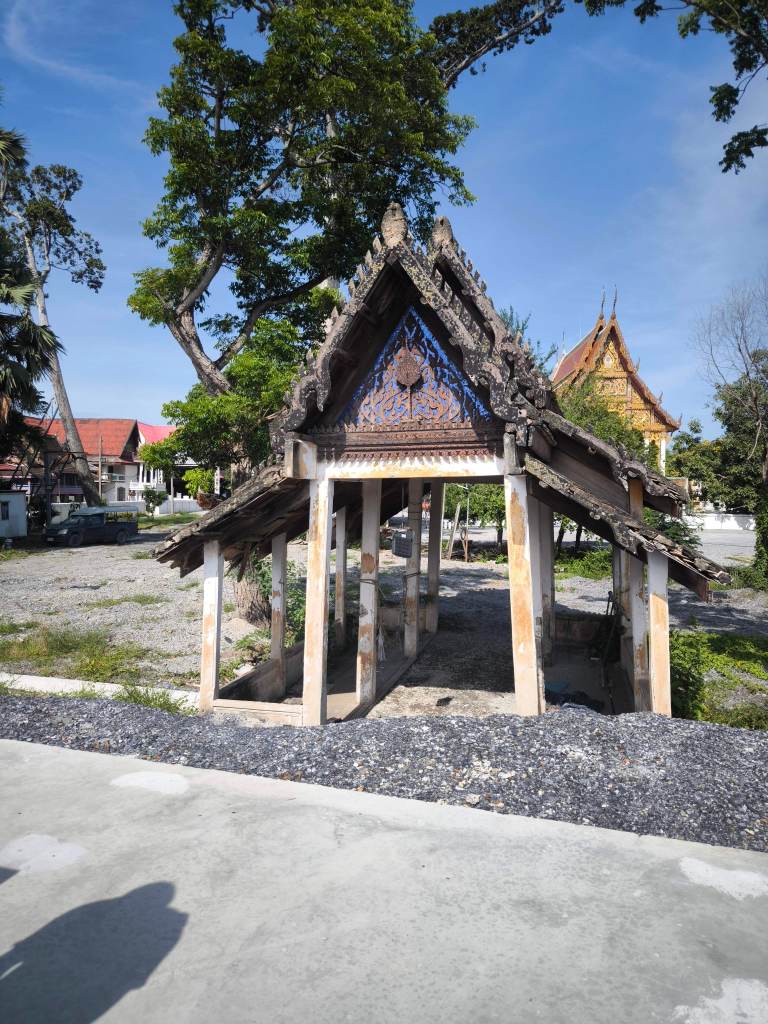
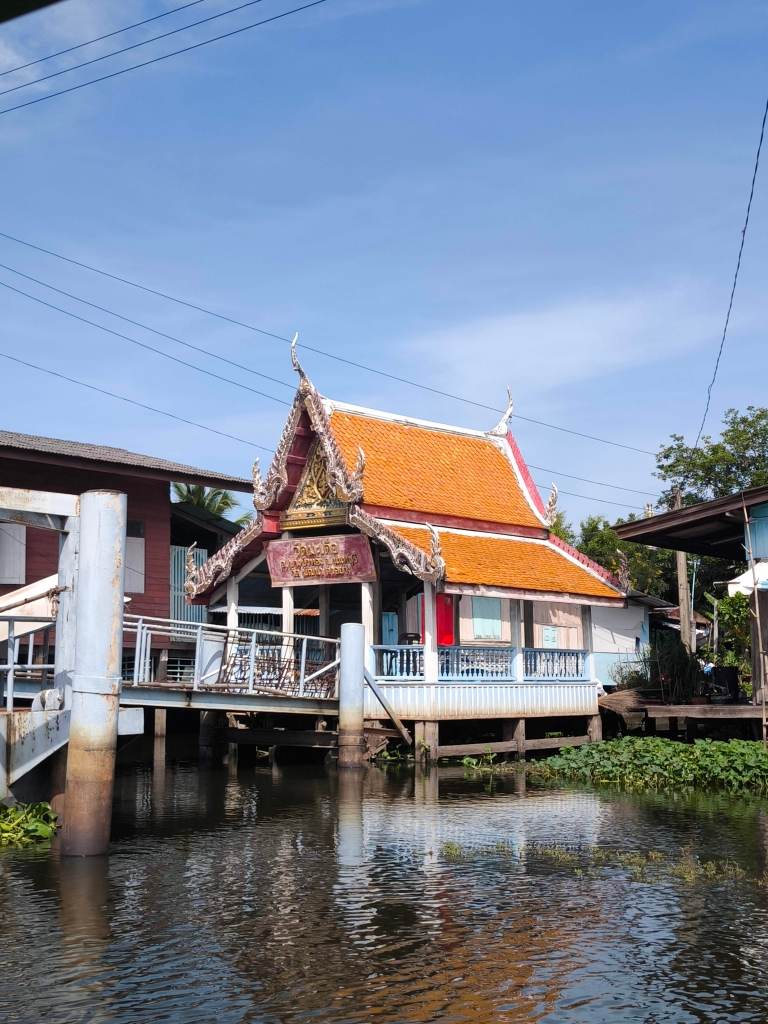
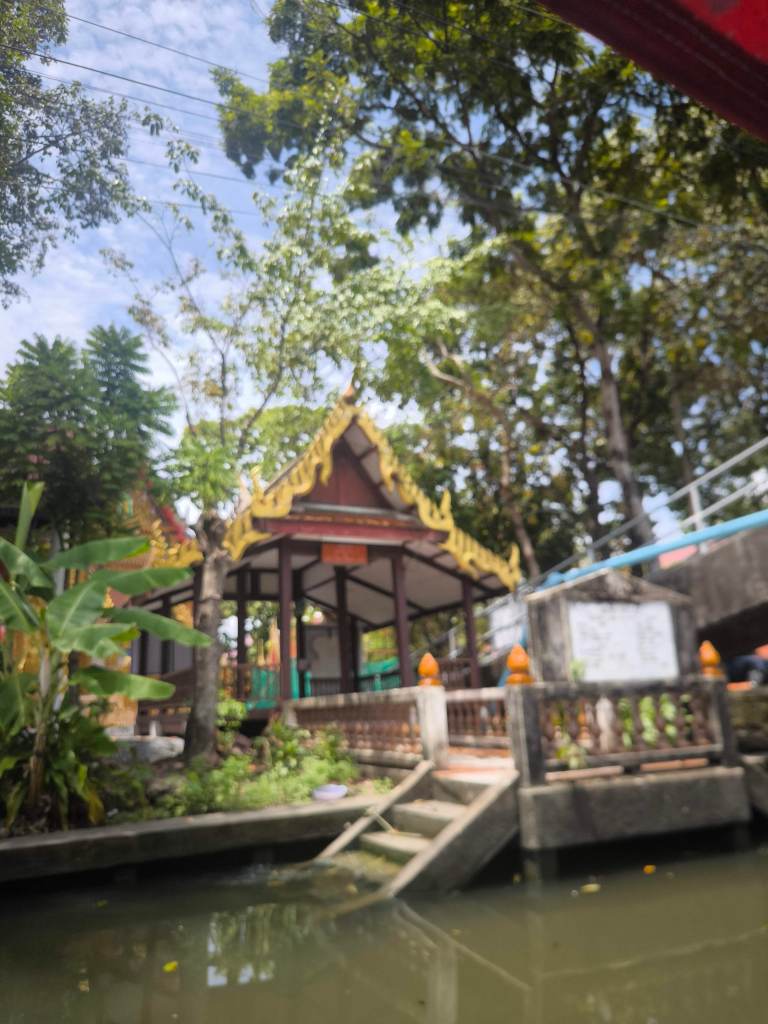
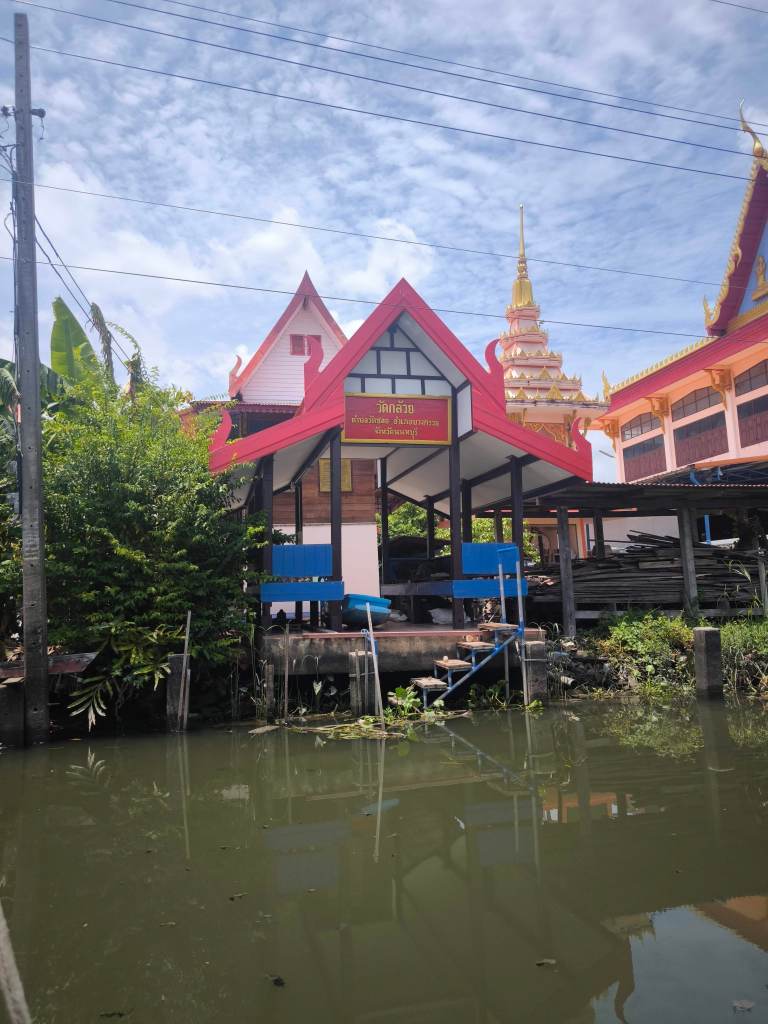
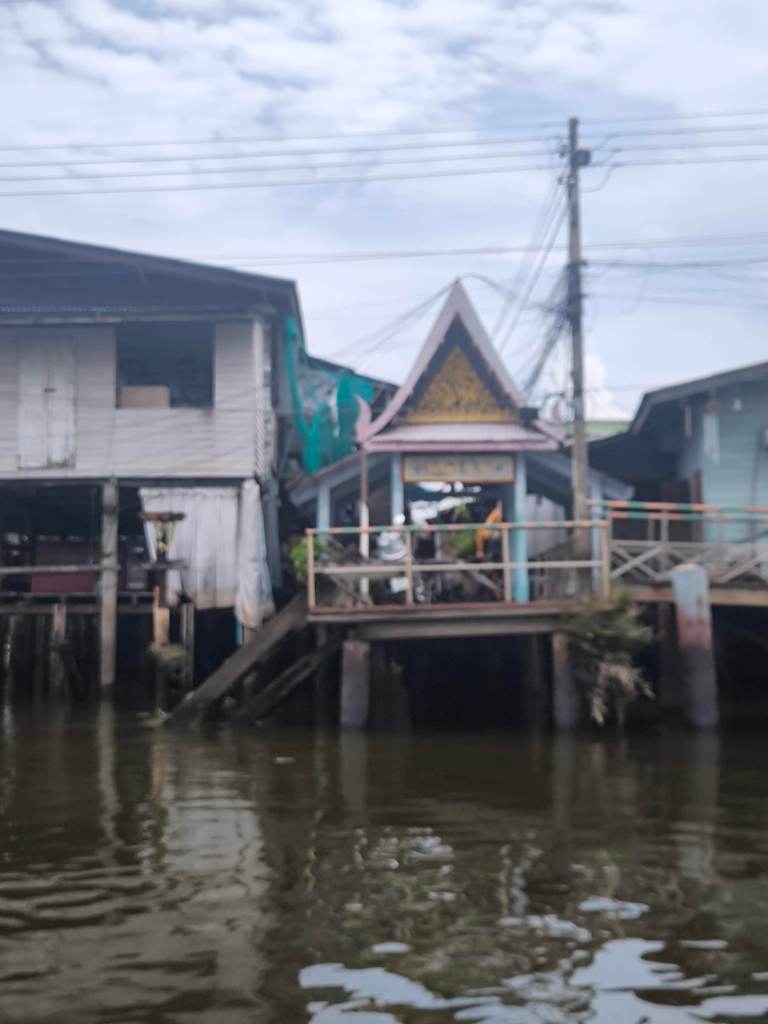
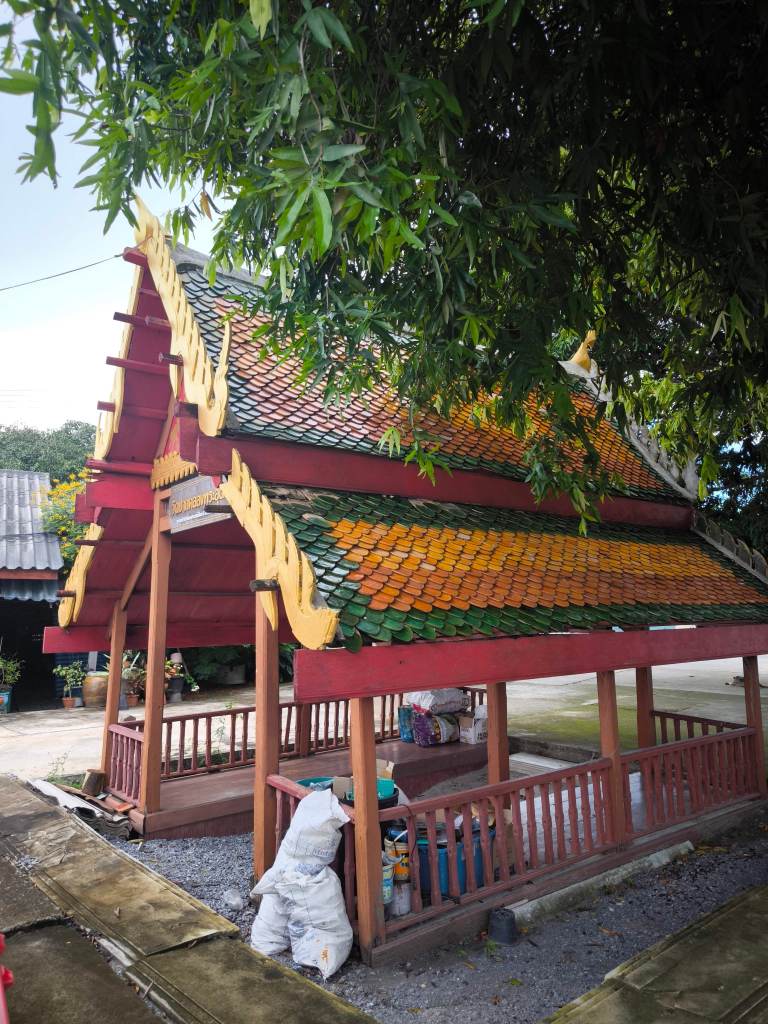
Its role also extended beyond everyday travel. In some communities, the pavilion was used to receive the deceased arriving by boat before the body was taken into the temple for cremation. Its broad platform supported relatives, monks, and other participants during this transition. The Sala Tha Nam therefore acted as a threshold between water and land, everyday life and sacred space, and sometimes between life and death. As temples and communities developed, the pavilion became more architecturally elaborate. Simple timber shelters were enlarged or decorated with tiled roofs, gables, finials, railings, and signs bearing the temple’s name. Some were combined with larger halls or enclosed spaces. These changes show how a practical waterside structure gradually acquired greater religious and social meaning.
The most significant transformation came with the expansion of roads. Temple entrances shifted toward the street, while funerary transport moved from boats to vehicles. Hospitals and modern administrative systems also changed how death and cremation were managed. The Sala Tha Nam consequently lost some of its former functions, although its architectural form often remained.
Changes to the canal edge created another layer of transformation. Embankments, land reclamation, flood barriers, and new walkways sometimes placed the pavilion farther from the water. In several locations, a structure that was originally built at the water’s edge now stands on dry ground or behind a concrete barrier. Its steps may no longer reach the canal, leaving the building physically present but disconnected from the environmental system that originally gave it meaning. However, this development is not a simple story of disappearance. Within smaller canal networks where the earlier shoreline and water access remain, the alignment of canal, landing, pavilion, and temple continues to support boat travel and ritual arrival. Elsewhere, the pavilion has adapted as a resting place, community meeting point, storage space, or reminder of the temple’s former waterside entrance.
The different forms seen along Khlong Aom Non therefore represent different relationships with the canal rather than a single architectural sequence. Some remain active water infrastructure. Some have been enlarged and adapted. Others survive mainly as carriers of ritual memory. Together, they document the gradual shift from a water-oriented settlement system to one dominated by roads and engineered canal edges. To regard the Sala Tha Nam only as a small traditional building would miss its wider significance. It is part of a living heritage ecosystem connecting architecture, water, mobility, ritual, and community life. Its survival matters not only because of its form, but because it records how people negotiated the boundary between land and water over generations.
The future of the Sala Tha Nam should therefore involve more than repairing roofs and columns. Conservation must also consider water access, the relationship with the temple axis, local practices, and the rights of canal communities to continue using the water. A pavilion remains living heritage when it can still connect people, place, memory, and the canal.


Leave a Reply